Placenta
The pale tissue inside the pod that holds the seeds. It's where capsaicin is made, which makes it the hottest part - the seeds only pick up heat by contact.
Cut a chilli in half lengthways. The pale, spongy tissue running down the centre, with the seeds attached to it, is the placenta. Cooks tend to call it the pith, the ribs or the membrane.
The seeds are not the hot part
This is the most repeated piece of misinformation about chillies, and it is worth being precise about why it is wrong.
Capsaicin is produced in glands on the surface of the placenta. The seeds make none of their own. They sit pressed against the tissue that does, pick some up by contact, and taste hot as a result. Scrape the seeds out and leave the placenta in, and you have removed very little heat.
The flesh is not innocent either. Capsaicinoids occur through the pod wall as well, at lower concentrations, and how much varies by variety.
What that means in the kitchen
Deseeding and deveining, meaning the seeds and the pale tissue they are attached to, does take a real amount of heat out. Deseeding on its own does far less than people expect.
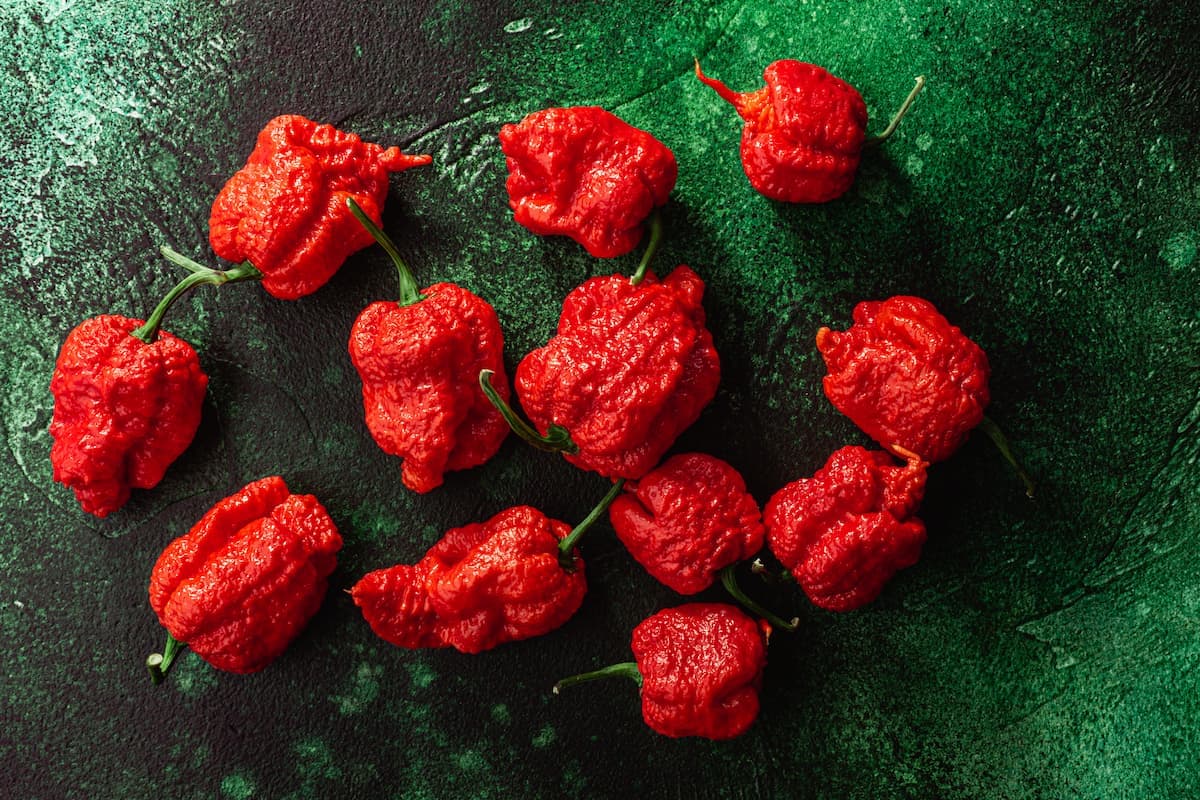
It will not rescue you from a superhot. Strip the placenta out of a Carolina Reaper and what is left is still a very hot piece of fruit, and the capsaicin you have scraped onto the board and your fingers has gone somewhere. Wear gloves.
For seed savers
The placenta is also where next year's seed is attached. A pod can look exactly right for its variety and hold seed carrying an unexpected cross, because what the pollen did is invisible until you sow it. If growing true to type matters, read cross-pollination first.