Prik Kee Noo
Cultivar · Bird's eye chili, Mouse Dropping Chilli, Mouse-dropping chili, Phrik khi nu, Prik Khi Nu, Thai Bird Chilli, Thai chili, พริกขี้หนู
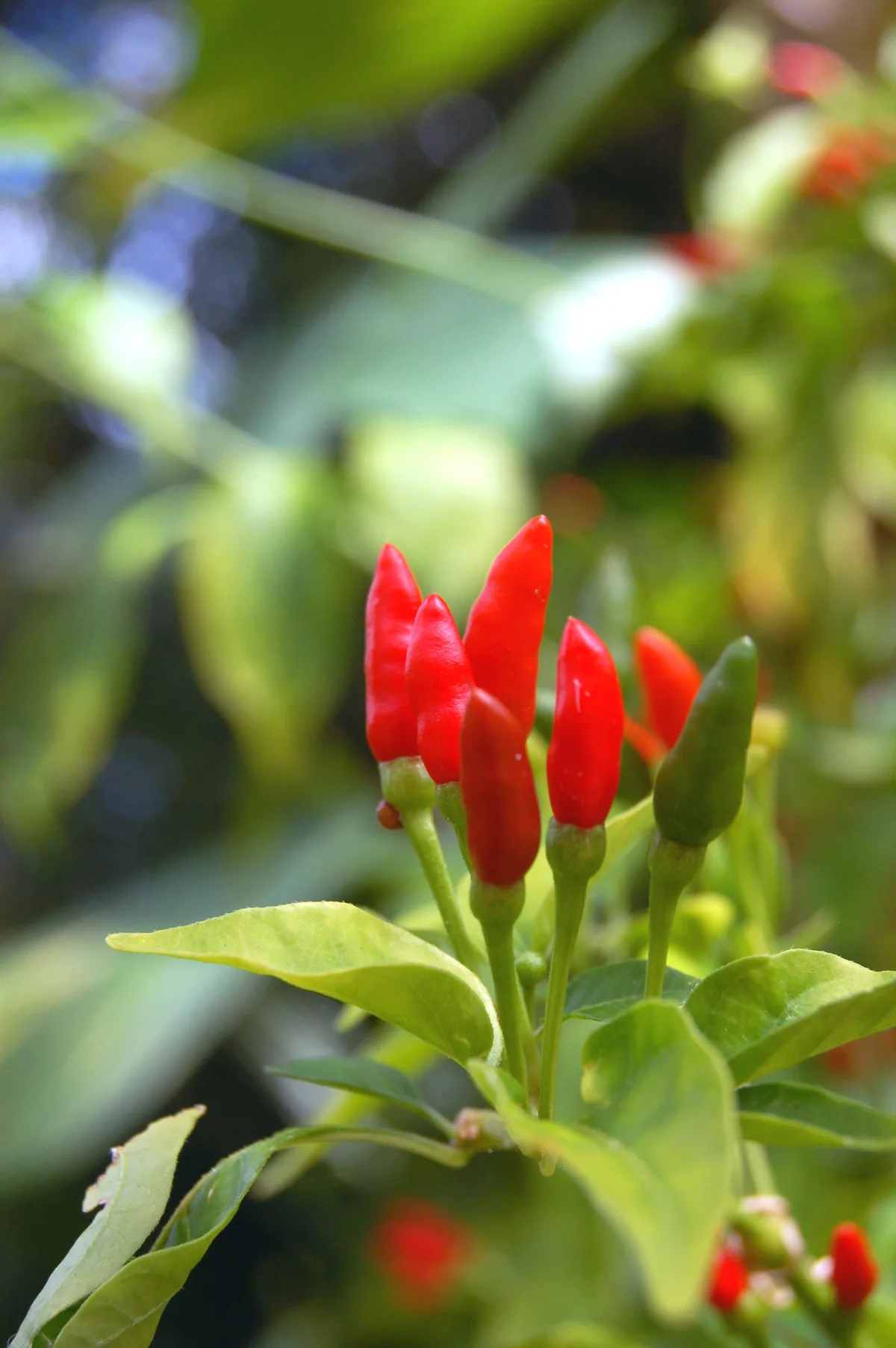
Prik Kee Noo is the authentic Thai bird's-eye chilli, the foundational hot chilli of Thai cuisine. Tiny upward-pointing pods deliver substantial heat (50,000-100,000 SHU) alongside clean fruity-citrus flavour - the "sharp bright fire" that defines authentic Thai cooking. The literal translation of the name is "mouse-dropping pepper" - a reference to the small size, not the provenance. Distinct from Western "Thai chillies" that are typically Thai-inspired hybrids rather than the genuine Thai variety.
History & lineage
Prik Kee Noo is the genuine Thai bird's-eye chilli, distinct from but closely related to other Asian and African bird's-eye varieties. The species classification is Capsicum frutescens, the same species as the Tabasco pepper and the African Bird's Eye - a small but important domesticated chilli species with fewer cultivars than the broader annuum or chinense families. The Thai name translates literally as "mouse-dropping pepper" - a reference to the very small size of the pods, which resemble mouse droppings in size and shape. Western politeness has largely shied away from the literal translation, preferring "Thai bird's eye" or "Thai chilli" in English-language usage. The literal Thai name is matter-of-fact about the comparison rather than disparaging - small-size descriptors of this kind are common in Thai food language. In Thai cuisine, the Prik Kee Noo is the foundational hot chilli that distinguishes Thai cooking from the cooking traditions of neighbouring countries. Where Vietnamese cuisine uses milder chillies, Lao cuisine often uses different bird's-eye types, and Cambodian cuisine has distinct chilli traditions, Thai cooking has a particular relationship with Prik Kee Noo - using it abundantly fresh in countless preparations. The chilli features in green curry paste, red curry paste, the universal nam pla prik condiment, and innumerable other Thai dishes. For Western growers, the Prik Kee Noo has remained somewhat under-cultivated relative to its culinary importance. Western seed catalogues often offer "Thai chilli" labelled hybrids (like the Thai Dragon F1) that approximate but rarely match the authentic Prik Kee Noo character. UK growers can succeed with genuine Prik Kee Noo through Thai or specialist Asian seed sources, with greenhouse cultivation typically more reliable than outdoor growing in British conditions. Authentic seed sourcing matters because Western "Thai chilli" hybrids generally lack the distinctive sharp citrus character that makes the genuine Prik Kee Noo central to Thai cooking.
Culinary uses
Foundational to authentic Thai cooking - in green and red curry pastes, in the iconic nam pla prik (fish sauce with chillies) condiment, in tom yum, and chopped fresh into countless Thai dishes. Used both fresh and dried; the dried form features in Thai-style chilli oils and dipping sauces. Essential to the Thai-cooking heat profile that Western "Thai dragon" hybrids approximate but rarely match. Often the unmissable ingredient that distinguishes authentic Thai cooking from Western Thai approximations.

